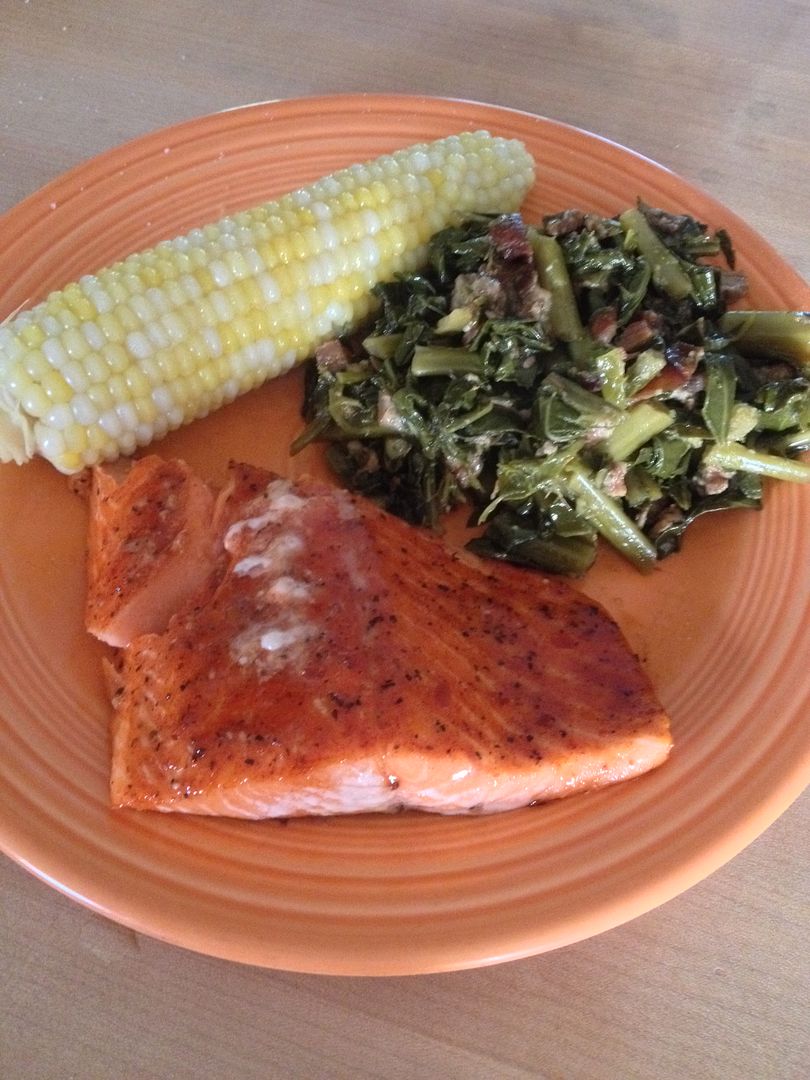
Over the holidays this past year, I was a bacon making machine. I was curing and smoking. Hope was slicing and packaging. In the middle of that pork belly mayhem, I was looking at a steelhead fillet in the freezer and wondered to myself if I could turn a steelhead fillet into a slab of bacon like goodness. If they can turn turkey or tofu into "bacon", I can try it with a nice meaty fish. Right? A plan was coming together. Cure, smoke, hot pan sear, fresh bread, tomato, lettuce, and mayo. The SLT was in my future.
I brought my smoker up to 165 F and added one piece of hickory into the ash pan. I didn't want to over smoke this fillet. I just wanted the light hickory flavor that is reminiscent of bacon. I smoked the fillet until the fish was starting to flake and the fat was starting to render from the meat, about two hours.
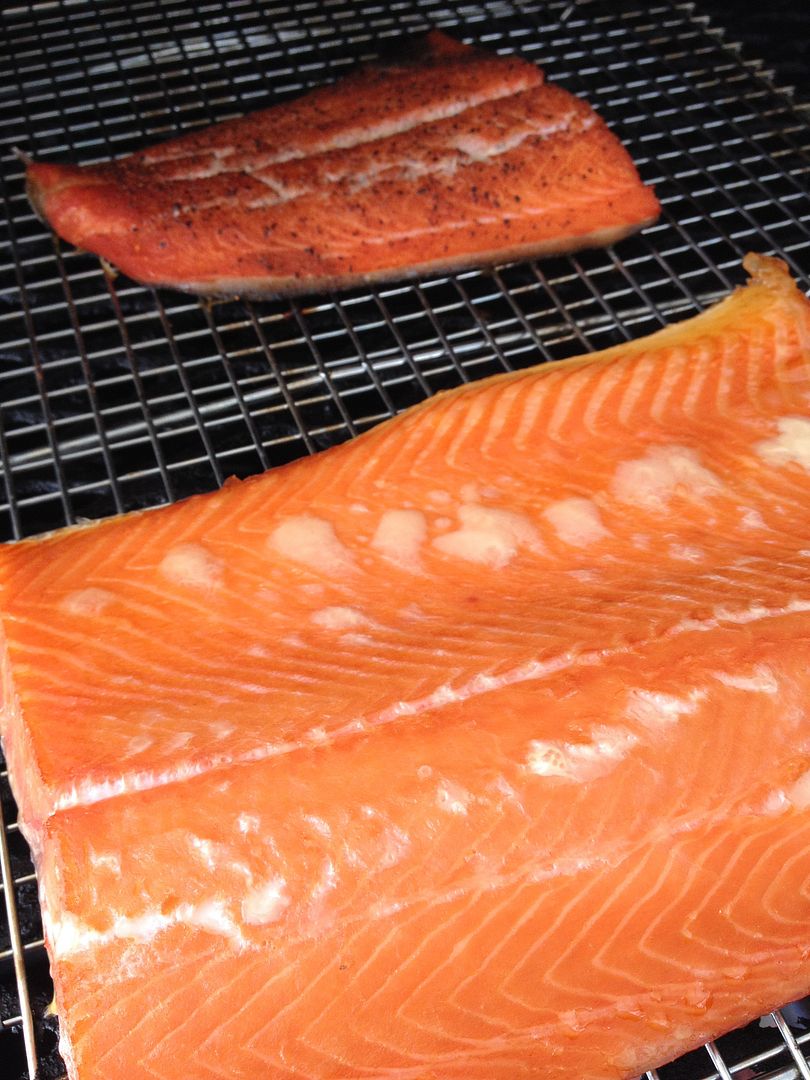
When finished, I brought the fillet inside and placed in a plastic bag to age for two days. Aging the fish in the refrigerator mellows the smoke flavor, allowing the flavors to mingle.
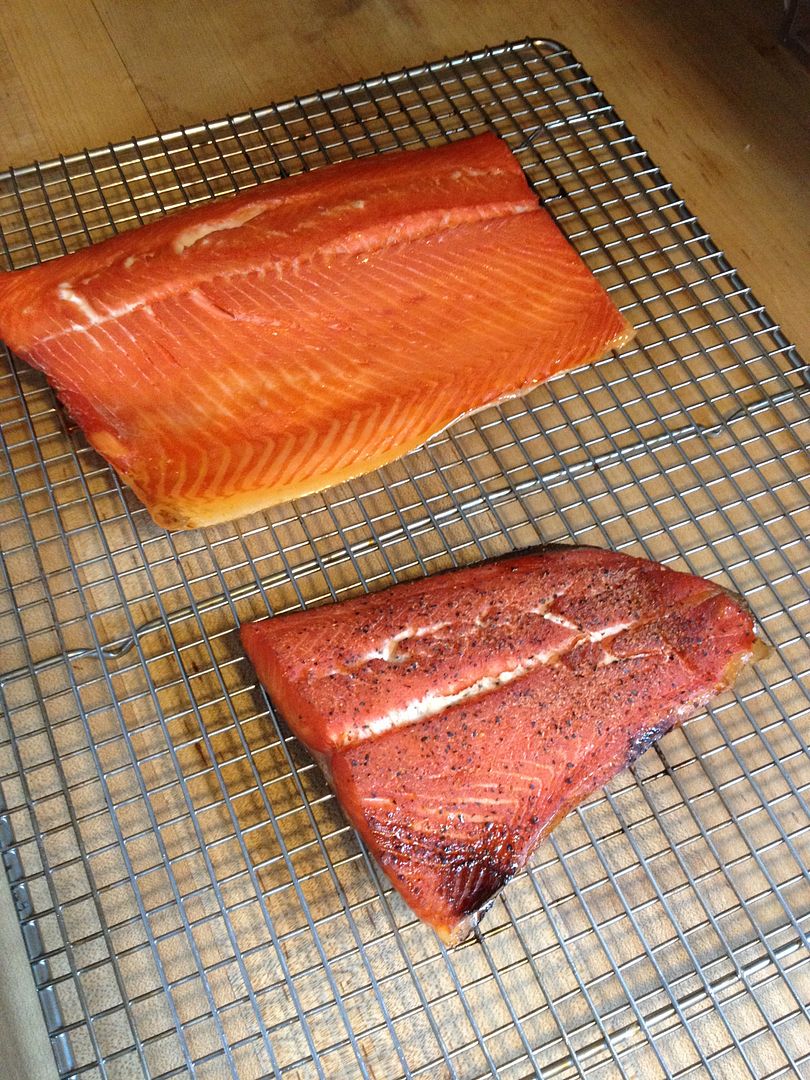
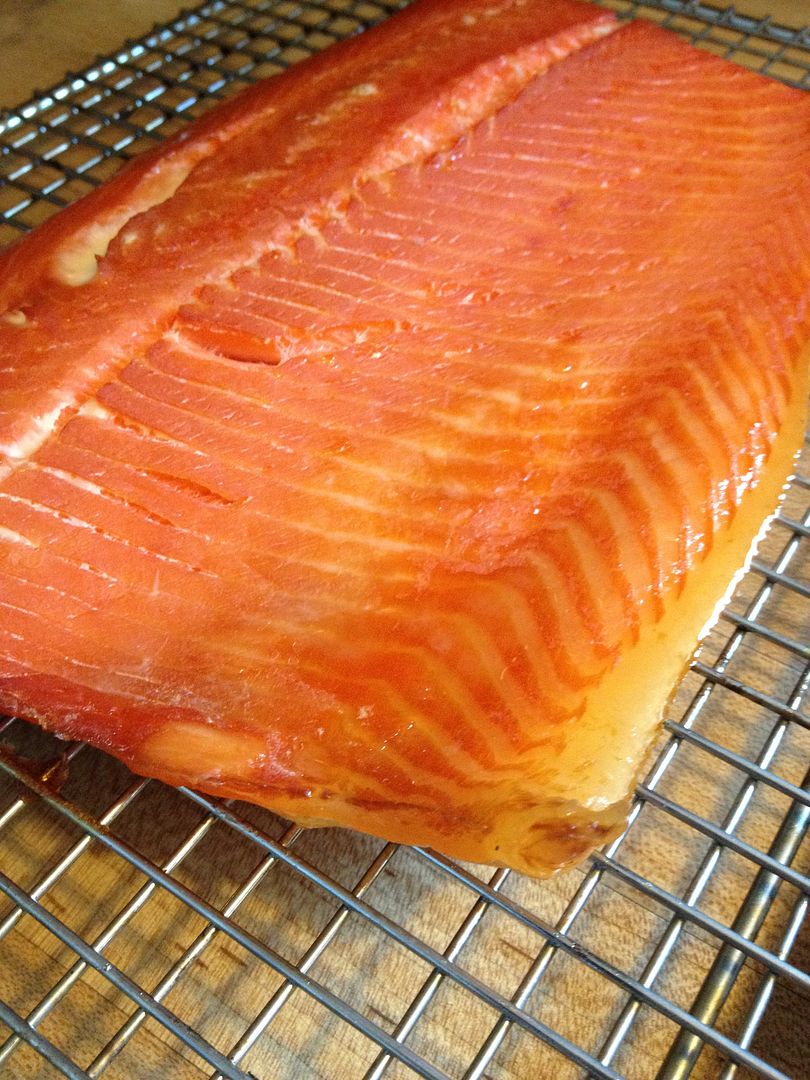
After the two day wait, I prepared for part two of this experiment. I had some sliced tomato, lettuce, and crusty French bread at the ready. I also prepared some sriracha mayo to top my sandwich. Then, I removed a portion of the unrubbed fillet and prepared to sear.
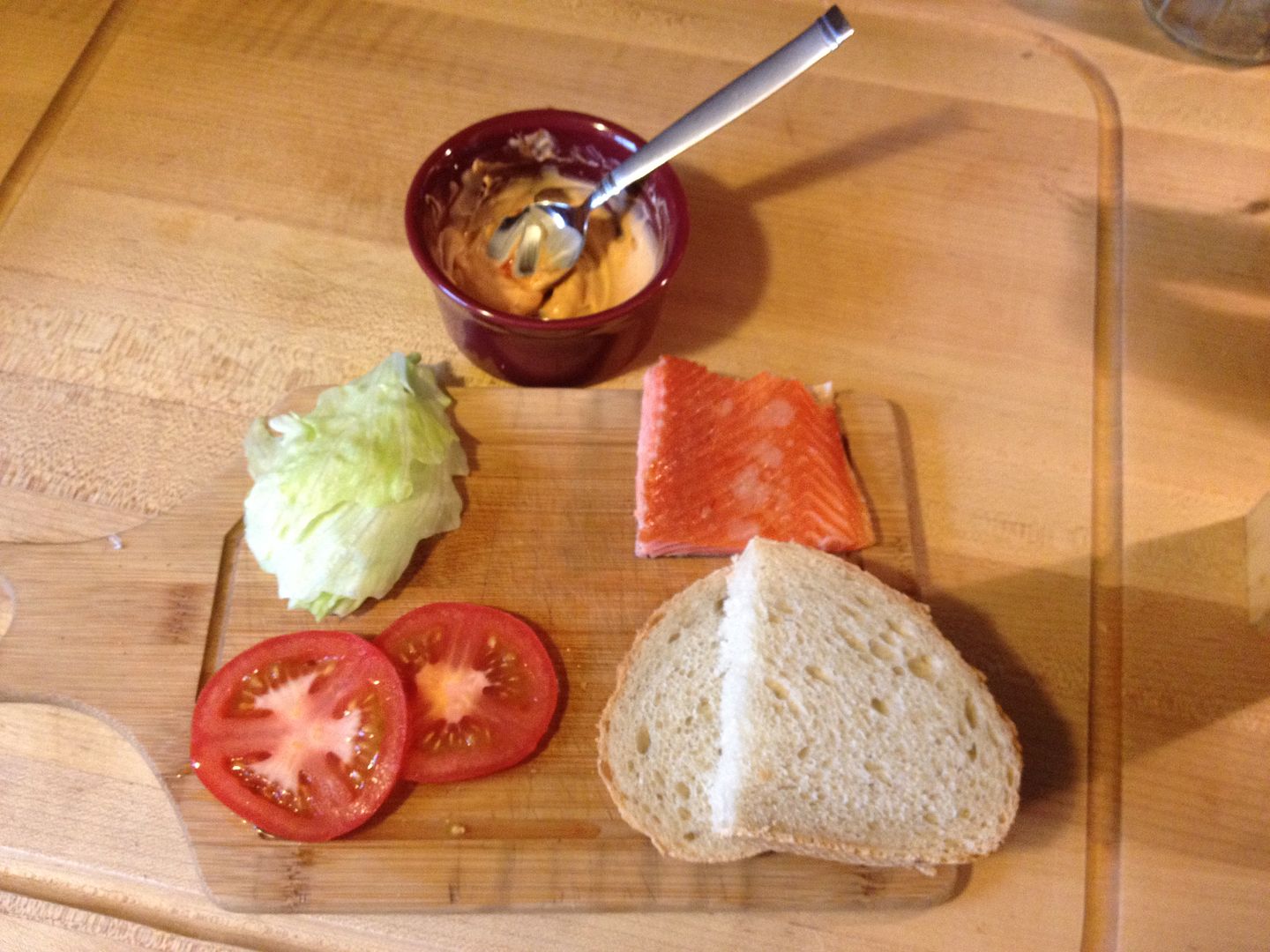
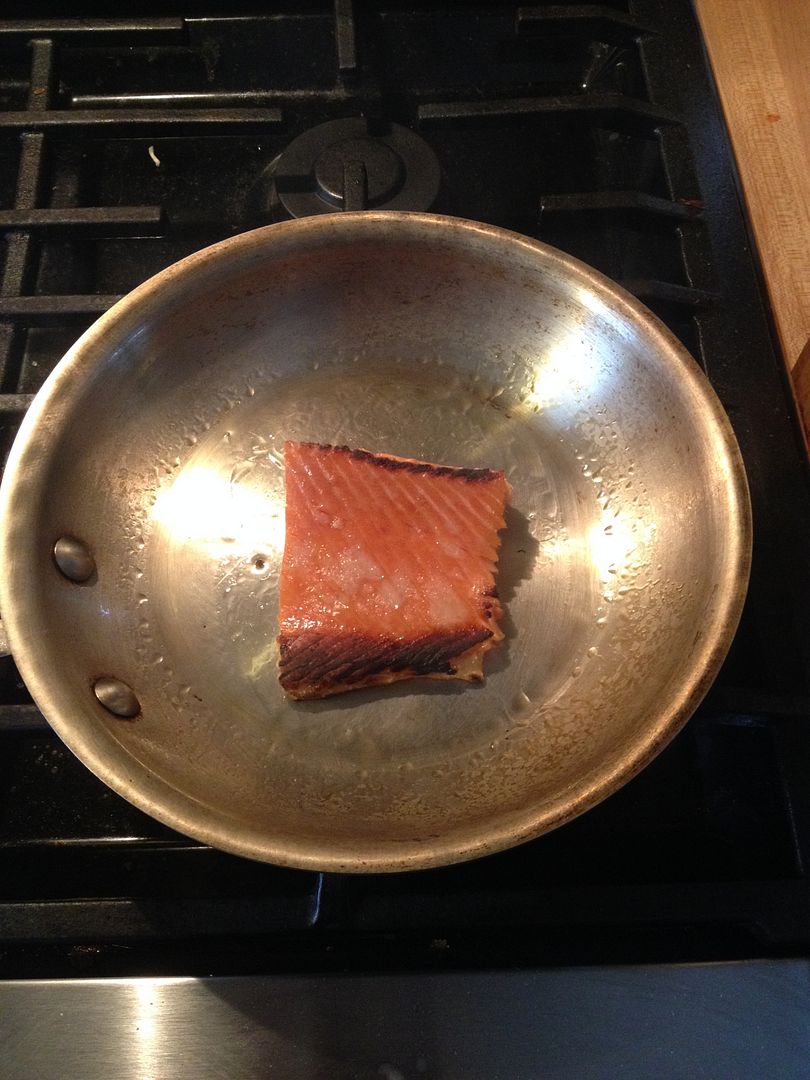
For searing, I added a touch of olive oil to a sauté pan and turned my burner to medium heat. Once the oil was hot, I slightly seared the meaty side, then flipped the fillet over and seared until the skin was nice and crispy.
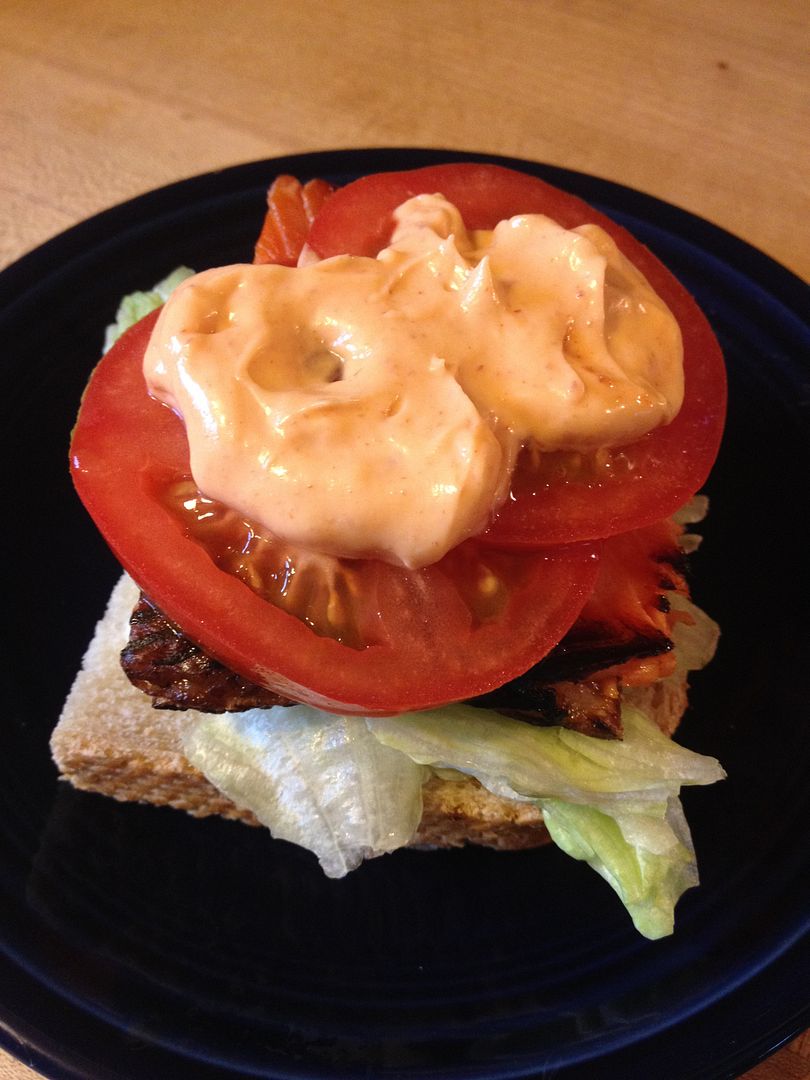
Next it was time to assemble the sandwich.
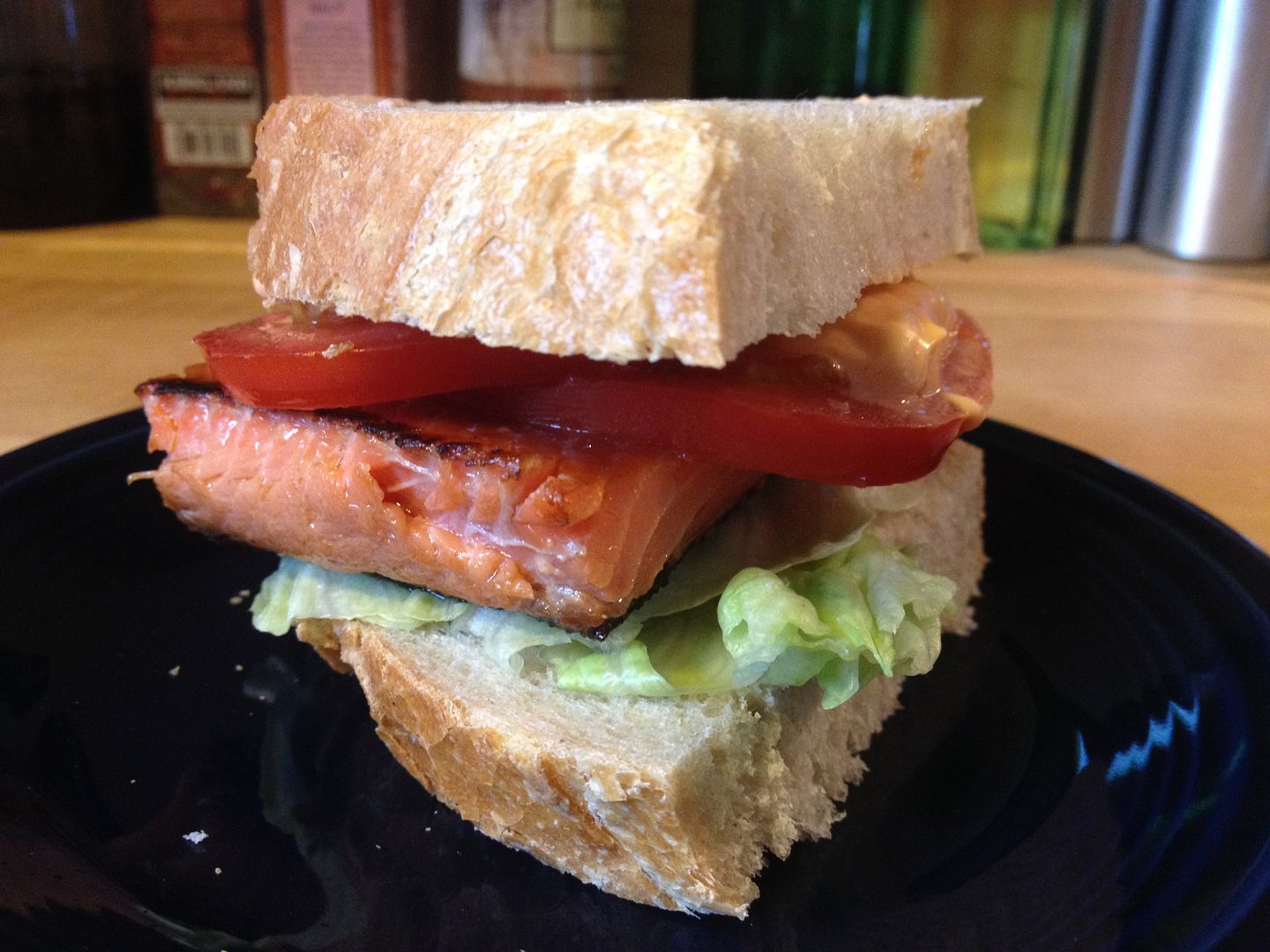
I am happy to report that this sandwich was pretty good. Light hickory flavor and a hint of apple from the brine. Crispy skin, crusty bread, and a bit of kick from the sriracha mayo. Was it like bacon? I am sorry to say no. This was a great piece of smoked fish, but bacon is better left for pork. I will make this sandwich again. But I will not be expecting bacon at all. As for the portion of the fish rubbed with the Oakridge game bird rub, the flavor was outstanding. The Oakridge Game Bird and Chicken rub never lets me down, no matter what dish I prepare using this product.
Thanks for stopping by,
Bill
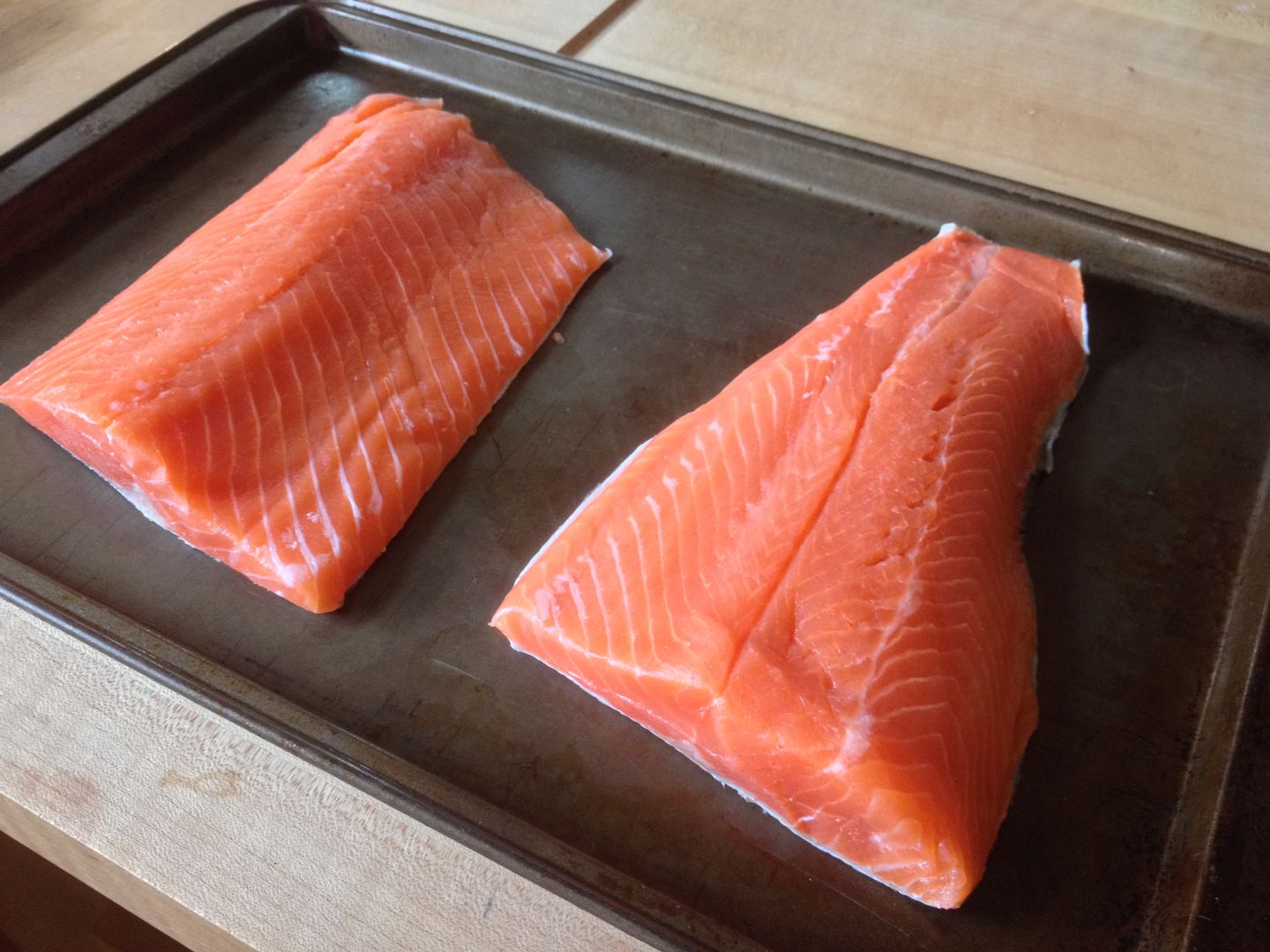
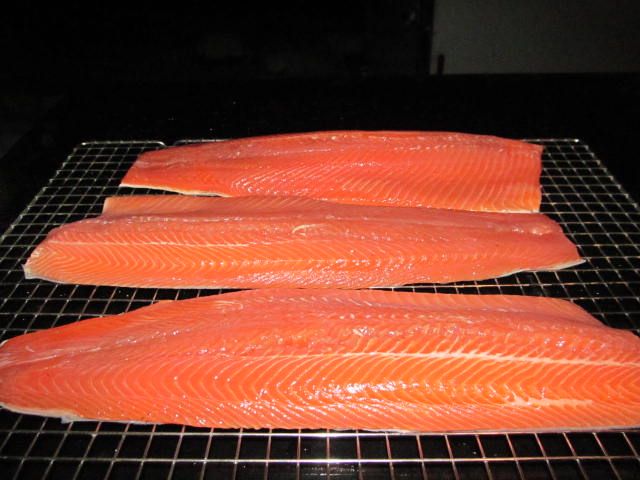
Later that week, I drove to my local pond (Costco) to go fishing for a nice steelhead. I approached the end case and started trolling for the perfect fish. It was tough battle, back and forth as these battles can be from time to time. But, after dodging a cart full of screaming kids and negotiating the 20 deep line for a free sample of Prepacked Demo Product Reheated in a Electric Skillet, I had my prize. Genuine hand caught, farm raised steelhead fillet.
After getting home, I froze one of the fillets for later use and started preparations for my steelhead "bacon" (I hope).
First, I whipped up a batch of our apple cider bacon cure:
2 oz Cure Salt (Prague Powder #1)
10 oz Kosher Salt
4 oz. Sugar
1/2 Gallon Apple Cider
1/2 Gallon Water
For our sugar source, we used turbinado sugar, otherwise known as Sugar in the Raw at your grocery store.
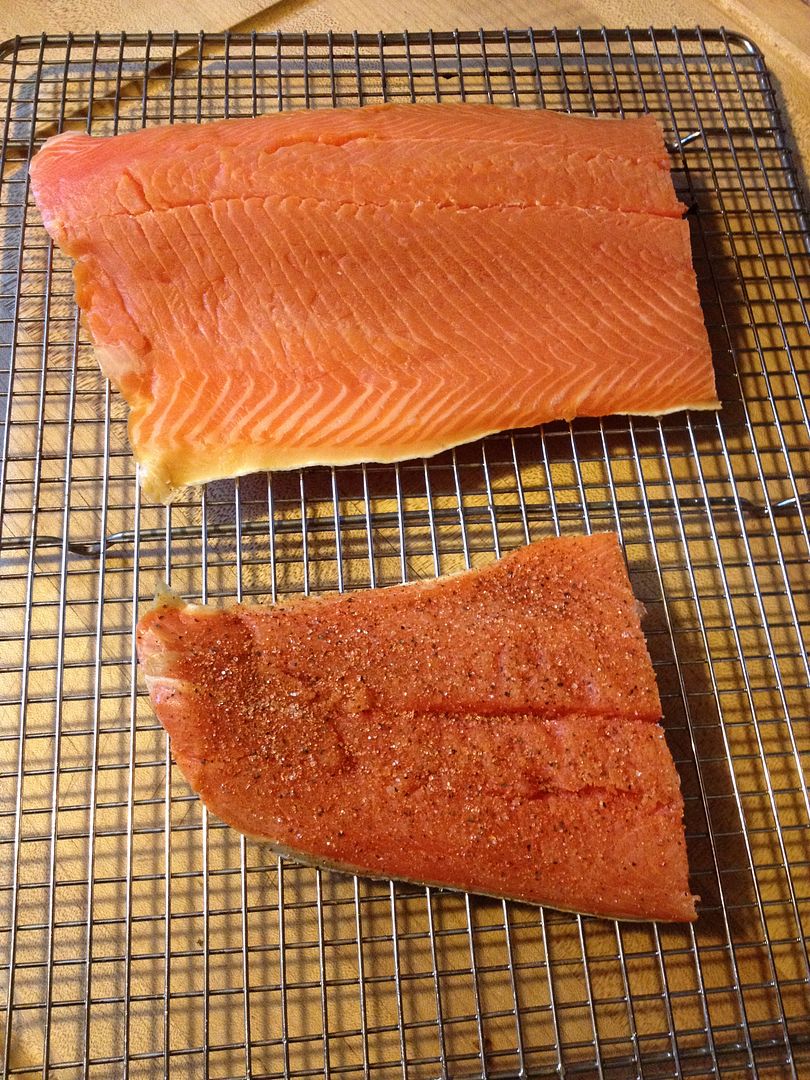
I chilled the brine down, then released the steelhead into the brine for one final two day swim. After two days in the brine, I removed the steelhead fillet and soaked in cold water for about 30 minutes to remove the excess salt. Then I cut my fillet in half for some experimentation.
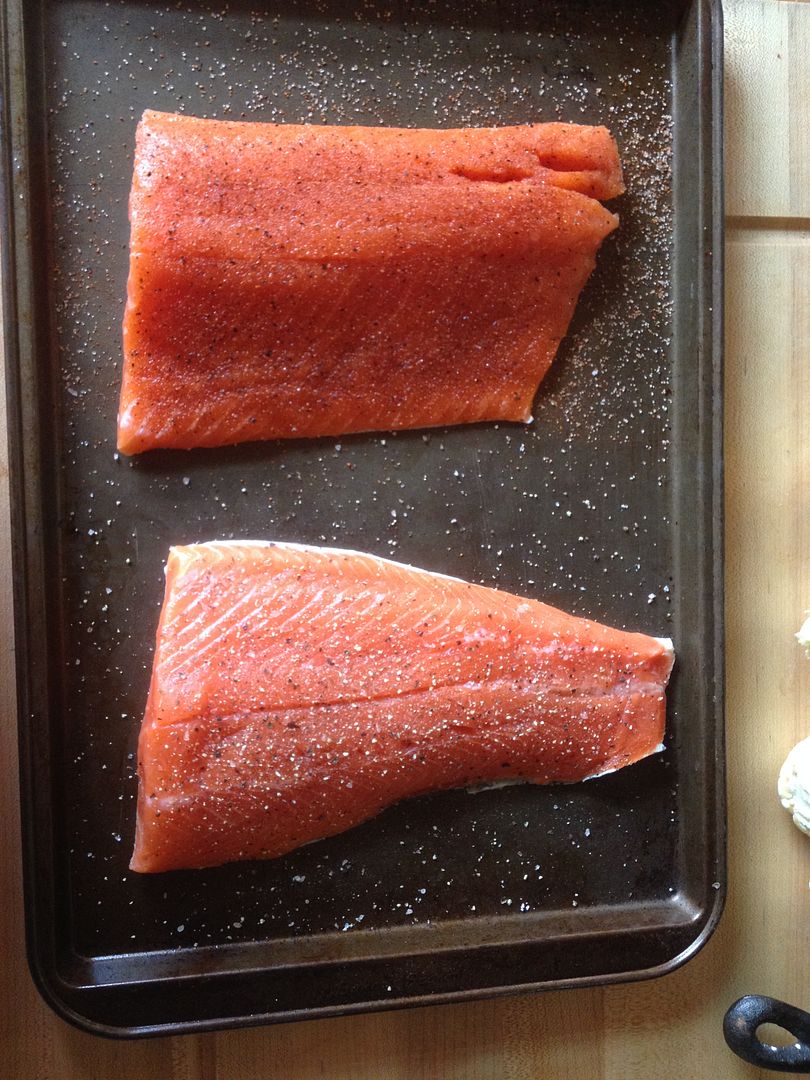
The larger piece was smoked as is. No rub, no flavoring. This would be my "bacon". The smaller piece was rubbed with Oakridge BBQ Game Bird and Chicken rub, one of my favorite non-competition rubs.
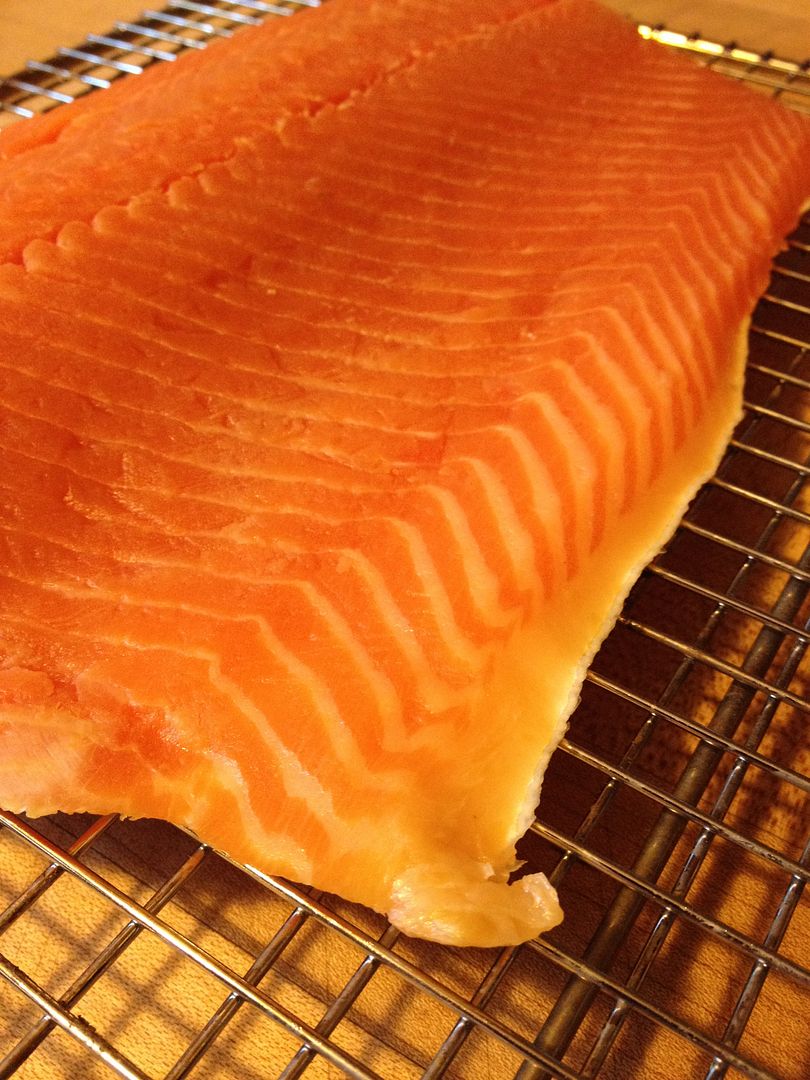
Upon closer inspection of the larger piece, I noticed that the fat on the belly part of the fillet had taken on that waxy look that pork belly fat has before smoking. Was I on to something? To be determined.
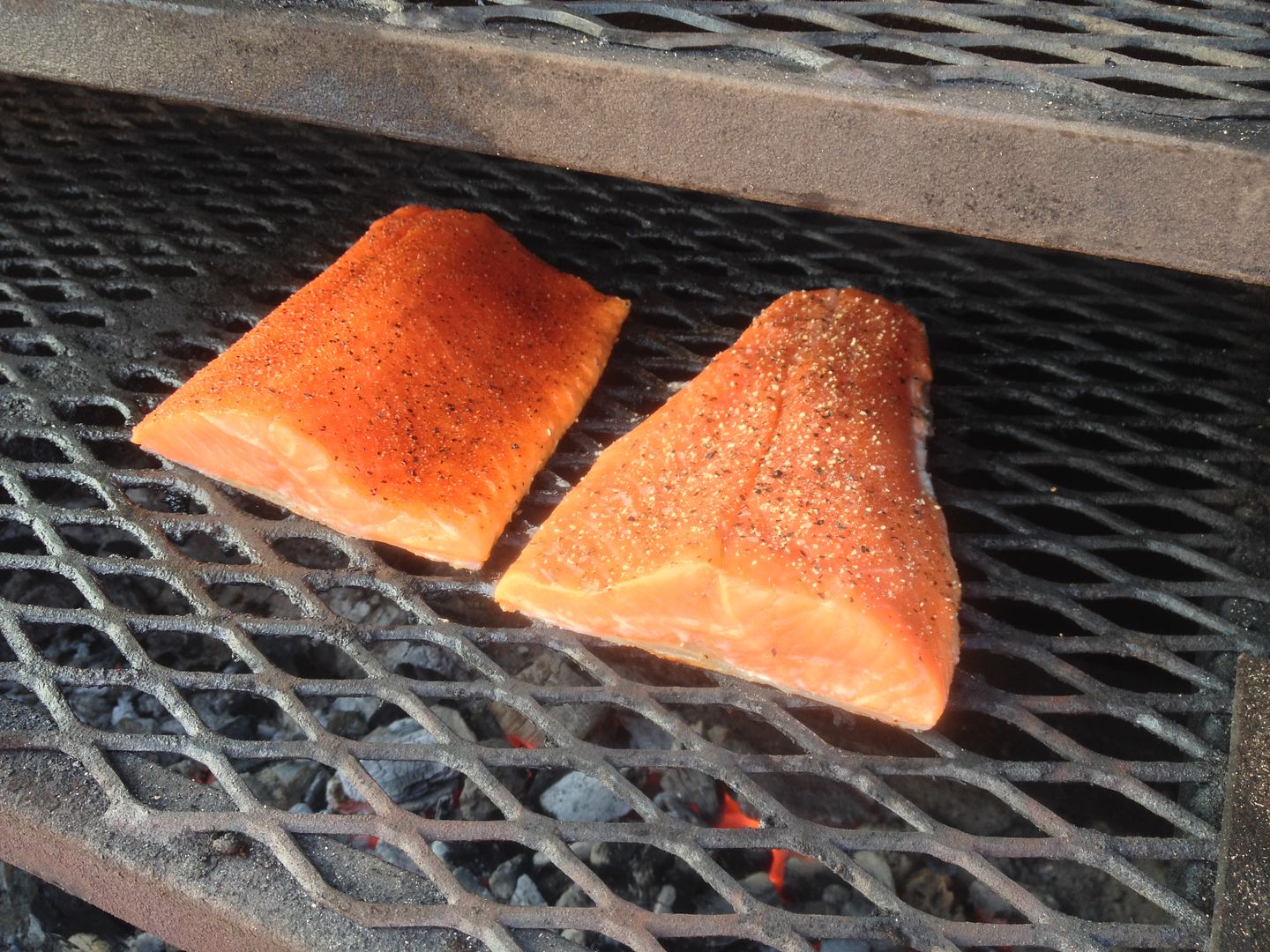
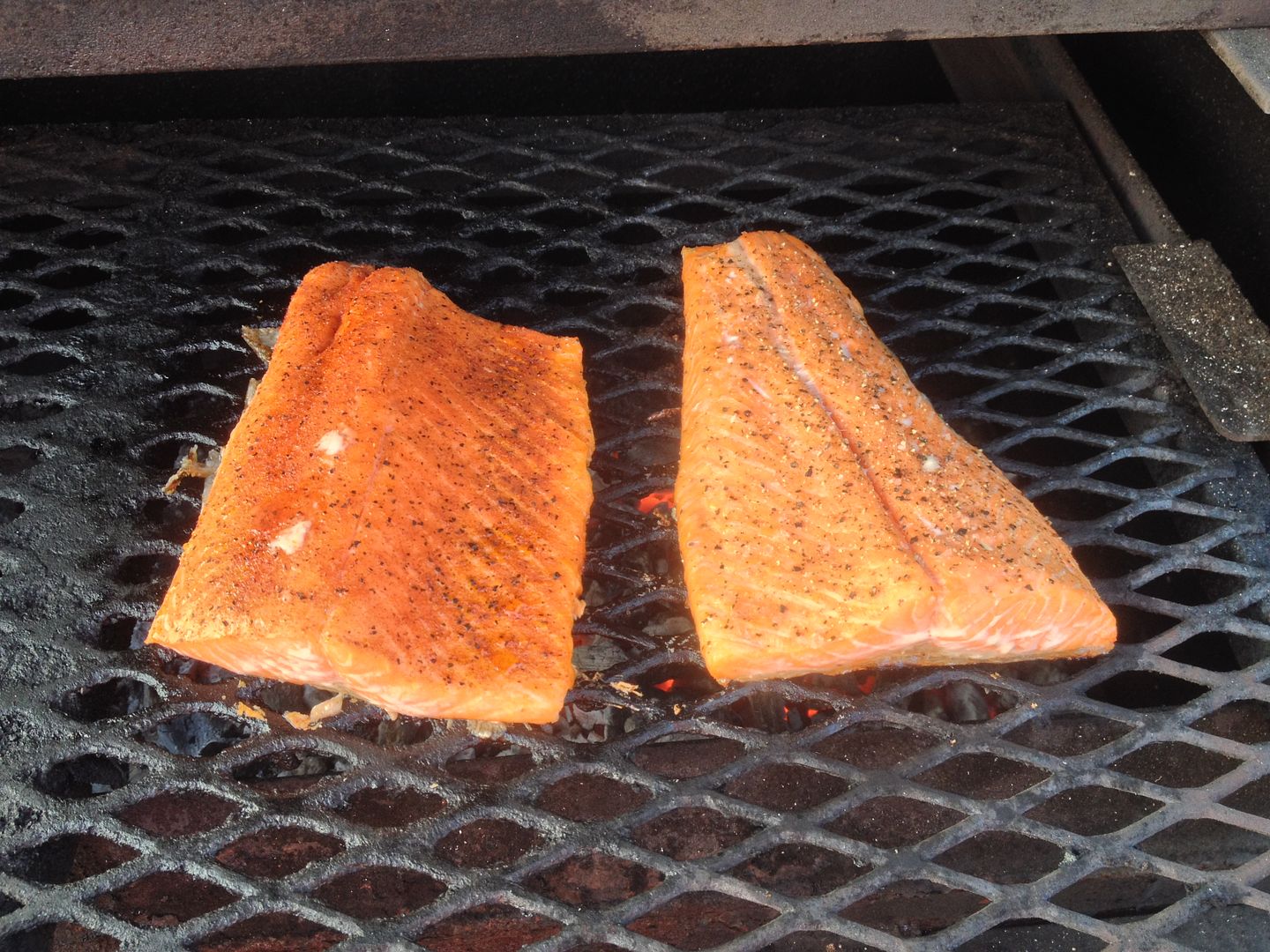
I brought my smoker up to 165 F and added one piece of hickory into the ash pan. I didn't want to over smoke this fillet. I just wanted the light hickory flavor that is reminiscent of bacon. I smoked the fillet until the fish was starting to flake and the fat was starting to render from the meat, about two hours.
When finished, I brought the fillet inside and placed in a plastic bag to age for two days. Aging the fish in the refrigerator mellows the smoke flavor, allowing the flavors to mingle.
After the two day wait, I prepared for part two of this experiment. I had some sliced tomato, lettuce, and crusty French bread at the ready. I also prepared some sriracha mayo to top my sandwich. Then, I removed a portion of the unrubbed fillet and prepared to sear.
For searing, I added a touch of olive oil to a sauté pan and turned my burner to medium heat. Once the oil was hot, I slightly seared the meaty side, then flipped the fillet over and seared until the skin was nice and crispy.
Next it was time to assemble the sandwich.
I am happy to report that this sandwich was pretty good. Light hickory flavor and a hint of apple from the brine. Crispy skin, crusty bread, and a bit of kick from the sriracha mayo. Was it like bacon? I am sorry to say no. This was a great piece of smoked fish, but bacon is better left for pork. I will make this sandwich again. But I will not be expecting bacon at all. As for the portion of the fish rubbed with the Oakridge game bird rub, the flavor was outstanding. The Oakridge Game Bird and Chicken rub never lets me down, no matter what dish I prepare using this product.
Thanks for stopping by,
Bill